Menjangan Island Diving: Bali's Best Walls, Site by Site
Why Menjangan Is Bali's Best Wall Diving
Menjangan Island is a small, uninhabited island off Bali's far northwest coast, inside West Bali National Park, and it holds the island's most consistent wall diving. The formula is simple: sheer coral walls that drop from shallow reef flats into deep blue water, visibility that is regularly among the best in Bali, and currents that are usually gentle enough for newly certified divers. Where Nusa Penida is adrenaline and thermoclines, Menjangan is calm, clear, and colorful — a place to hang weightless beside a wall covered in sea fans and simply look.
The trade-off is distance. Menjangan sits about as far from Bali's southern tourist belt as you can get, which keeps the boats fewer and the reefs quieter. For divers willing to make the journey — or better, to base themselves nearby in Pemuteran — it rewards the effort with some of the most relaxed, scenic diving on the island.
Where Menjangan Fits in the Bali Diving Map
Menjangan lies just off the Prapat Agung Peninsula in Bali's northwest corner, protected within Taman Nasional Bali Barat (West Bali National Park). The name means "deer" in Indonesian — wild deer live on the island and are sometimes seen swimming the channel from the mainland, which is how the island got its name.
Because the island sits in a sheltered stretch of sea, shielded from the swell that pounds Bali's south coast, conditions here are calmer and clearer than almost anywhere else on the island. That protection, plus national park status, is why the walls have stayed in good shape.
If you're still deciding where Menjangan ranks among your options, our overview of the best dive sites in Bali puts it in context against Tulamben, Amed, and the Nusa islands. The short version: come here for walls, visibility, and tranquility — not for big pelagic action.
How the wall diving works
Most Menjangan dives follow the same satisfying pattern:
- Entry over a shallow reef flat at roughly 3–10 meters, often bright with hard corals and anthias.
- Over the lip and onto the wall, which drops steeply — in places nearly vertically — into deep water.
- A slow drift along the wall with the reef on one shoulder and open blue on the other, usually in mild current.
- A gradual ascent back onto the flat for the safety stop, which doubles as a second dive's worth of scenery.
Walls here typically bottom out well beyond recreational limits, but the best of the color and life sits in the top 25 meters, so the sites work for every certification level. Your guide sets the depth; there is no need to go deep to see the good stuff.
Menjangan Dive Sites, Site by Site
Site names around Menjangan vary a little between operators, but most boats work a handful of established moorings and drift lines around the island. These are the ones you're most likely to dive.
Pos I (Pos 1)
Named for a park ranger post on the shore, Pos I is a classic Menjangan wall on the island's southern side. Expect a shallow coral terrace giving way to a steep drop decorated with gorgonian sea fans, barrel sponges, and crevices sheltering lionfish and moray eels. Currents are usually mild, making this a common first dive of the day and a comfortable site for less experienced divers.
Pos II (Pos 2)
Pos II, toward the island's eastern end, is many guides' favorite. The wall here is dramatic — deeply fissured, cut with small caverns and overhangs, and densely grown with fans and soft corals. Turtles are a regular sight, and the blue water off the wall is always worth a glance for passing trevallies or the occasional reef shark. When mild current runs, this becomes an easy, scenic drift.
Coral Garden
Not everything at Menjangan is vertical. Coral Garden is a gentler, sloping site with extensive hard-coral cover in the shallows — a favorite for second or third dives, long shallow profiles, and photographers who want light. It's also one of the better snorkeling areas in the park, so non-diving companions on your boat are well served here.
Eel Garden
At the island's western tip, Eel Garden combines a sandy slope dotted with colonies of garden eels — swaying like grass until you get close — with a fine wall section nearby. The mixed terrain makes it one of the more varied dives at Menjangan: macro subjects on the sand, fans and sponges on the wall, and schooling fish where current touches the point. When more water is moving, this end of the island sees the most action.
Anchor Wreck (Kapal Budak)
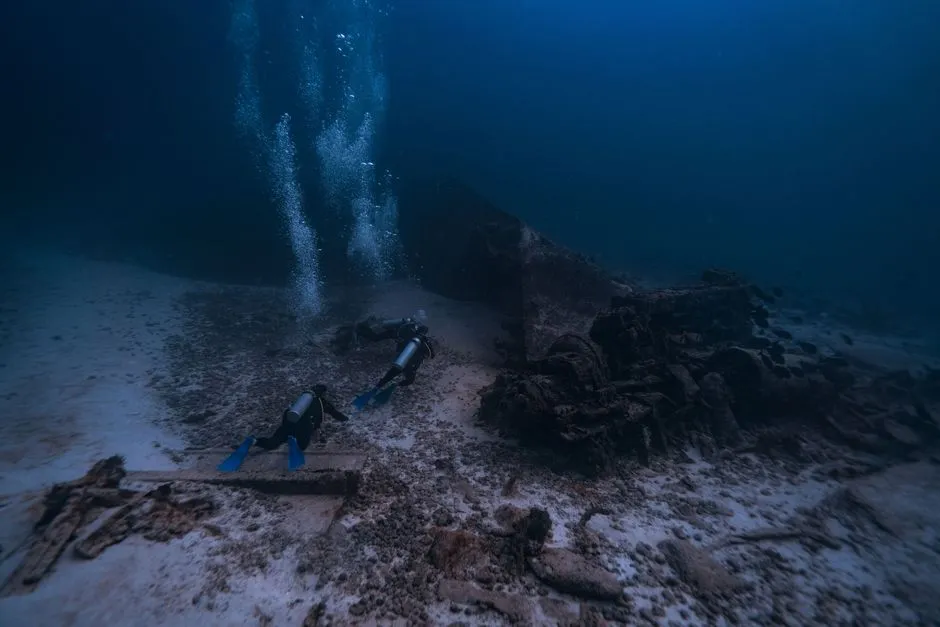
On the island's northwest side lies Menjangan's piece of history. An old, heavily encrusted anchor rests on the reef in shallow water, and the scattered remains of a wooden ship lie down the slope in deeper water, generally beyond 30 meters. Local accounts describe it as a ship from the colonial era, and the deeper section is best treated as a dive for advanced divers with the depth training to enjoy it properly. Everyone else still gets a rewarding dive on the shallow anchor and the surrounding wall.
Bat Cave
Near a cliff where bats roost above the waterline, Bat Cave offers another strong wall with overhangs and small caverns cut into the rock. The topography is the draw — swim-throughs of light and shadow, fans in the recesses, and the same reliable visibility that defines the area.
Site comparison at a glance
| Site | Character | Typical level | Highlights |
|---|---|---|---|
| Pos I | Classic wall | Open Water+ | Sea fans, sponges, easy profile |
| Pos II | Dramatic fissured wall | Open Water+ | Turtles, caverns, big fans |
| Coral Garden | Gentle slope | All levels / snorkelers | Hard corals, shallow light |
| Eel Garden | Sand slope + wall | Open Water+ | Garden eels, varied terrain |
| Anchor Wreck | Wall + wreck remains | Deep section: Advanced | Encrusted anchor, history |
| Bat Cave | Wall with overhangs | Open Water+ | Topography, swim-throughs |
What You'll See Underwater
Menjangan's signature is scenery more than headline animals. The walls carry dense growth of gorgonian sea fans — some very large — along with barrel sponges, soft corals, and healthy hard coral on the flats above. Fish life is classic Coral Triangle reef fauna: clouds of anthias and damselfish over the shallows, angelfish, butterflyfish, batfish, and schooling snappers and fusiliers along the walls.
Regulars include:
- Green and hawksbill turtles, seen on most days somewhere around the island
- Moray eels, lionfish, and scorpionfish tucked into the wall's crevices
- Garden eels on the sandy patches, especially at the western end
- Macro life for patient eyes — nudibranchs are common, and guides sometimes find pygmy seahorses on the larger sea fans
- Occasional visitors from open water: trevallies, barracuda, and now and then a whitetip reef shark resting under a ledge
What Menjangan is not is a big-animal destination. Manta rays and mola mola belong to the Nusa Penida side of Bali. Come here for reef quality, not giants, and you won't be disappointed.
Conditions, Seasons, and Who Menjangan Suits
Conditions at Menjangan are among the friendliest in Bali:
- Visibility: frequently 20–30 meters or more on good days — often the best on the island
- Current: typically mild to moderate; strong current is the exception rather than the rule
- Water temperature: warm year-round, generally in the high 20s Celsius, without the cold thermoclines that hit Nusa Penida
- Sea state: sheltered and usually calm, with easy boat entries
That combination makes Menjangan ideal for newly certified divers, underwater photographers, divers easing back in after a break, and anyone who prefers relaxed profiles over drift adrenaline. Advanced divers still get plenty from the deeper wall sections and the Anchor Wreck.
Menjangan dives well for most of the year. The dry season, roughly April through November, is the most reliable window; the rainy months can bring reduced visibility and occasional rougher days, though diving usually continues. For how the northwest compares with the rest of the island month by month, see our season-by-season breakdown of when to dive Bali.
As always, treat this as background, not a briefing. Your local operator reads the day's conditions and makes the call — that's their job, and at Menjangan, as everywhere in Bali, their judgment overrides anything written here.
How to Get to Menjangan Island
All diving at Menjangan is boat diving, and almost all of it runs through the jetty at Labuhan Lalang, on the mainland shore of the national park. From there it's a short crossing — typically around 30 minutes — to the island's moorings in small local boats arranged by your dive operator, along with the required national park permits and a licensed guide. Fees for park entry and guiding apply and change from time to time, so confirm current rates with your operator; most dive packages fold them into the price.
Your realistic options for getting there:
- Stay in Pemuteran (recommended). This quiet coastal village is around a half-hour drive from Labuhan Lalang and has grown into the natural base for Menjangan diving, with dive centers and accommodation at every budget. Two or three nights here turns Menjangan from a slog into an easy morning.
- Day trip from Lovina. Feasible, at roughly 1.5–2 hours' drive each way. Workable if you're already based on the north coast.
- Day trip from South Bali. Possible but punishing — expect around 4 hours each way from the Sanur/Kuta/Seminyak area. A pre-dawn start, two dives, and a long ride home. If Menjangan is a priority, build an overnight stop into your route instead; our guide to planning a Bali diving trip covers how to sequence the island's regions without living in a car.
A popular route pairs Menjangan with East Bali: a few days in Pemuteran, then along the north coast to Tulamben and Amed. If you'd rather let a resort handle the logistics, several dive-focused places in the northwest run daily Menjangan boats — see our guide to Bali's best dive resorts by region for how to choose one.
Is Menjangan Worth It?
Yes — with the right expectations. Menjangan won't show you a manta or a mola, and it demands more travel time than any other major Bali site. What it offers instead is the island's most beautiful, most relaxing reef diving: true walls, superb visibility, healthy coral, and a national park hush that the busier coasts lost long ago. For new divers it's arguably the best place in Bali to fall in love with the sport; for experienced divers it's the calm, colorful counterweight to Penida's currents. Give it two days and a night in Pemuteran, and it will likely end up a highlight of your trip.