Best Dive-Focused Resorts in Bali by Region
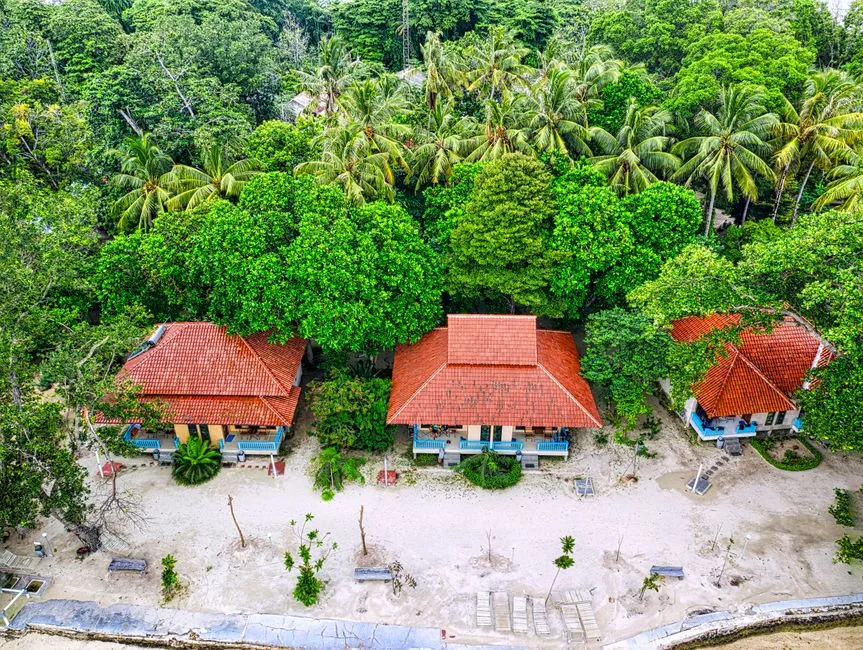
- The best Bali dive resort starts with the right coast
- Four dive-focused stays worth comparing
- What makes a resort genuinely dive-friendly?
- Which Bali region fits your diving?
- Why choose a Tulamben dive resort?
- Why choose an Amed dive resort?
- Should you stay on a Nusa island?
- Why make Menjangan a separate stay?
- How should you compare Bali dive-resort prices?
- What should you ask the dive operator?
- Protect the last day of the resort stay
- A ten-point booking decision
The best Bali dive resort starts with the right coast
There is no single best dive resort in Bali. The useful shortlist changes with the diving: Tulamben for repeatable shore access to the USAT Liberty area, Amed for a slower east-coast mix of shore and boat dives, Nusa Lembongan or Nusa Penida for current-led trips around the Nusa islands, and Menjangan or Pemuteran for a dedicated northwest block. Choose the coast first, then compare the operator and room as one package.
This guide is desk research, not a claim that we stayed with or tested any property. The named examples were selected because their current first-party or training-agency pages disclose useful, checkable features. They are starting points for a fresh quote, not rankings or endorsements.
Four dive-focused stays worth comparing
Checked on 5 September 2026, these four examples represent different regional jobs:
| Base and example | Best fit | What the published page actually confirms | What still needs a direct answer |
|---|---|---|---|
| Tulamben: Tauch Terminal Resort Tulamben & Spa | Divers who want an integrated beachfront base and repeat local diving | Its official site lists a beachfront location, an in-house dive center, gear rental, two pools, a restaurant and rooms with private terrace or balcony. | Exact walking or porter route to each shore entry, guide ratio, oxygen and emergency plan, package inclusions |
| Amed: Hotel Uyah with Amed Dive Center | Divers who value a published accommodation-and-diving bundle | The current package page identifies SSI Dive Center 741052 and says packages include breakfast, two or three dives per day, mask, snorkel, weights, tanks, local transport, local site fees, guide, and tax. | BCD, regulator, wetsuit and fin charges; exact sites; room class; group size; cancellation terms |
| Nusa Lembongan: Lembongan Dream Dive Resort | Divers who want island accommodation tied to a current agency-listed center | PADI's current center listing identifies a PADI 5 Star IDC Resort with full-board accommodation, 10 sea-view rooms, an on-site classroom, air fills and equipment rental. | Boat, harbor transfer, island fees, guide ratio, site-selection process, oxygen and evacuation route |
| Northwest: Mimpi Resort Menjangan | Divers building a three- or four-day Menjangan and Pemuteran block | The resort's current FAQ lists a PADI-certified center, equipment, courses, guided trips and about 18 accessible sites: 10 Menjangan, four Pemuteran, two Gilimanuk and two Puri Jati. | Exact boat scope, park charges, equipment, gases, single-diver supplement, cancellation and weather substitutions |
The table is deliberately specific about evidence. “PADI” or “SSI” affiliation confirms an agency relationship; it does not by itself prove that the day's equipment, boat, guide, oxygen supply or emergency plan is suitable. Likewise, “beachfront” describes the property, not necessarily a worthwhile house reef or a walkable entry to the site you want.
What makes a resort genuinely dive-friendly?
A Bali “dive resort” may be a hotel with its own center, accommodation beside an independent operator, or a conventional resort that books a third party. The label alone does not settle the decision. Audit six connected systems:
- Dive operation: Who takes the booking, who supplies the guide, and who is responsible on the boat or shore?
- Site access: Is the planned dive reached by walking, local boat, road transfer, fast boat or several of those?
- Equipment: Which pieces are included, which cost extra, and can the operator provide the correct size and exposure protection?
- Daily logistics: What time is the briefing, where is breakfast, and are rinse, drying and secure storage areas available?
- Safety system: Is emergency oxygen at the dive site or on the boat, is staff trained to use it, and is there a practiced emergency action plan?
- Commercial scope: Are local fees, transport, meals, taxes, deposits, cancellation and condition-led substitutions written down?
Divers Alert Network's travel guidance tells divers to understand destination conditions, ask how the operator provides first aid and oxygen, and ask about its emergency action plan. That is a stronger booking test than an attractive pool or an agency logo.
Which Bali region fits your diving?
| Region | Main trip role | Common access pattern | Experience question |
|---|---|---|---|
| Tulamben | USAT Liberty, black-sand macro, local reefs | Mostly shore-led local program | Are rocky entries and the planned profile comfortable? |
| Amed | Coral slopes, macro, relaxed mixed program | Shore dives plus local boats | Is the named site shore or boat, and how far is pickup? |
| Nusa Lembongan / Penida | Mantas, cooler-season mola planning, drifts | Boat diving with current-led site choice | Does recent experience fit the day's current, surge, depth and temperature? |
| Menjangan / Pemuteran | Wall diving and a quieter northwest block | Resort-to-boat logistics and park-area trips | Are transfer, boat, park and equipment scopes all in the quote? |
| Sanur or Padang Bai | Mainland staging for boat trips | Road plus boat rather than a house-reef stay | Is convenience ashore worth the longer dive-day chain? |
No row guarantees a sea state, sighting or difficulty level. A local professional reading current conditions decides the site. Our Bali dive-trip planner shows how to combine regions without compressing transfers or the final no-fly interval.
Why choose a Tulamben dive resort?
Tulamben is the clearest choice when the purpose is repeated east-coast shore diving. PADI's current Tulamben destination page describes the USAT Liberty as metres from shore and the area as known for shore dives, black volcanic sand, coral gardens and drop-offs. The live article's 30-metre-from-shore orientation and 5-to-30-metre depth span remain useful planning anchors for the wreck, but neither replaces a site briefing or personal depth limit.
Sleeping locally makes an early booking possible and avoids a cross-island road transfer before each dive. Confirm the actual route from room to entry: a resort can be in Tulamben without being beside the wreck. Coral Garden and the Drop-Off are also local names worth asking about, but “house reef” should be attached to a mapped entry and an operator plan, not assumed from marketing.
Tauch Terminal is one integrated example. Simpler dive lodges and guesthouses can be equally practical if the dive operation, storage, breakfast timing and entry logistics are sound. Use our Tulamben lodging guide and USAT Liberty guide to verify the exact diving job before choosing the room.
Why choose an Amed dive resort?
Amed suits travellers who want a quieter, spread-out base with coral, volcanic-sand macro and a mix of shore and local boat diving. PADI's Amed destination page currently describes generally calm seas, 26–29°C (79–84°F) water and a 2.5-to-3-hour airport drive. Those are destination-level planning figures, not promises for a booking or a particular day.
The old guide called Amed “twenty minutes” from Tulamben and singled out Jemeluk and Lipah as hubs. Keep those place names, but do not schedule an airport, boat or dive from that 20-minute shorthand; road origin, traffic and the chosen cove change the transfer. Ask for the pickup boundary in writing.
Hotel Uyah with Amed Dive Center is useful because the operator publishes its package scope and admits that sites depend on weather and sea conditions. Its page also says a diver whose last dive was more than two years ago needs a refresher. That is the operator's rule for its package, not a universal Bali threshold. DAN is more conservative about skill decay: after a few inactive months, practice fundamental skills, and after a year or more, take a refresher with an instructor.
For a head-to-head regional choice, use our Amed versus Tulamben guide.
Should you stay on a Nusa island?
Nusa Lembongan or Nusa Penida can shorten the land-side chain for an island dive program, but an island room does not guarantee first arrival at Manta Point, Crystal Bay or any drift wall. Boat loading, tide, current, swell and the operator's route control departure and site order. A Sanur day boat may still be the better fit for a traveller who needs mainland services or has only one Nusa diving day.
Reef mantas are regularly seen around the Nusa area through the year; mola mola planning is commonly concentrated around July to October. Neither is guaranteed. The old article correctly warned about serious currents, surge and downcurrents, but its claim that Nusa sites categorically require Advanced certification was too broad. Qualification, recent experience, buoyancy, drift skills, cold tolerance and the actual site must be considered together.
Lembongan Dream's current PADI listing confirms on-site accommodation and diving facilities, which makes it a reasonable property to quote. It does not publish enough on that listing to settle group size, emergency oxygen or evacuation. Ask those questions before paying. Read the Nusa Penida currents guide and the mainland day-trip guide before choosing island versus Sanur.
Why make Menjangan a separate stay?
The northwest deserves its own block because it is a long road move from east Bali and the Nusa departure corridor. Mimpi Menjangan's current guidance recommends at least three to four days for its principal sites and says the center opens from 07:00 to 20:00, with newly arrived divers asked to arrange the following day in advance. That is unusually useful operational detail.
The property is on a lagoon near Menjangan Island, and its own FAQ says the beach is not ideal for swimming. This is an important distinction: a waterfront stay can be a boat-diving base without being a swimmable beach or shore-diving house reef. If a non-diving partner expects easy swimming, ask a separate question about the water directly in front of the property.
Pemuteran accommodation outside a resort can also work if a reputable operator supplies pickup, boat and park logistics. The room and the dive center do not have to share ownership; their handoff just has to be explicit.
How should you compare Bali dive-resort prices?
Do not use the old market-wide room bands of US$20–45, US$50–120 and US$130–350+, or the old US$35–55 per fun dive estimate, as 2026 quotes. They were useful orientation but were not tied to dated, like-for-like inventories. One current official example, Tauch Terminal, advertises rooms from €49 per night; that is one property's starting rate, not a Bali benchmark.
The Amed Dive Center package page provides a better lesson in scope. Its posted one-night, two-dive, double-occupancy per-person prices are IDR 1,179,000 in high season, IDR 1,109,000 in mid season and IDR 1,073,000 in low season. The page includes breakfast, mask, snorkel, weights, tanks, local transport and fees, guide and tax, while listing BCD, regulator, wetsuit and fins at IDR 50,000 per item per day. Verify the rate and availability directly before booking.
Compare every candidate in one currency and one occupancy basis:
room + diving + equipment + gases + boats + road transfers + local or park fees + meals + taxes + payment fees = comparable total
Then write down the number of nights, dives and divers. A “stay and dive” package may be excellent value, but only if its included sites, equipment and transfers match the trip you would otherwise buy. The Bali diving cost guide has a fuller quote worksheet.
What should you ask the dive operator?
Send the same questions to every shortlisted property:
- Who operates the diving, and will that operator appear on the invoice?
- What certification, recent experience and logged-current experience are required for the proposed sites?
- What is the maximum group size, and how many divers will the assigned guide lead?
- Is emergency oxygen physically present at the dive site or on the boat, checked, and sufficient for the route to care?
- What is the communication, lost-diver, delayed-boat and evacuation plan?
- Which equipment is included, and can exact BCD, suit and fin sizes be reserved?
- Are nitrox, computers, SMBs, torches, cameras, porters and private guides included or extra?
- Which room, meal, road transfer, boat, local fee, park fee and tax is included?
- What happens to the itinerary and payment if conditions change the site or cancel the boat?
The old “ideally four or fewer divers per guide” rule sounded precise but was not a universal safety standard. Keep four as a comparison point only: ask every operator for its actual ratio, then judge it alongside diver experience, site, conditions and guide support. A small group does not repair an unsuitable site or a missing emergency plan.
Protect the last day of the resort stay
A dive-aware resort should help plan the final surface interval, but the diver remains responsible for the flight schedule. DAN's current flying-after-diving guidance recommends at least 12 hours after one no-decompression dive and at least 18 hours after multiple dives in a day or diving over multiple days. After dives requiring decompression stops, substantially longer than 18 hours appears prudent. Longer intervals reduce risk further, and these recommendations do not guarantee avoidance of decompression sickness.
Anyone with symptoms that may indicate decompression sickness should seek medical care and not fly. Do not let a late checkout, package maximum or prepaid boat compress this interval.
A ten-point booking decision
Before paying, confirm:
- The coast matches the diving you actually want.
- The named operator, property and meeting point are written down.
- Sites are matched to certification, recent experience and current comfort.
- The quote uses one currency, occupancy basis and dive count.
- Equipment, gases, boats, transfers, meals, fees and tax are itemised.
- Guide ratio and group-matching rules are explicit.
- Oxygen, communication and emergency-action answers are specific.
- Condition-led site changes and cancellations have written terms.
- Non-diver, accessibility, dietary and swimming needs are checked separately.
- The departure plan protects the correct final surface interval.
Choose the resort only after those ten lines are complete. In Bali, the right room supports the dive plan; it does not substitute for one.