Manta Ray Season in Bali: Best Time to See Reef Mantas
Is There a Manta Ray Season in Bali?
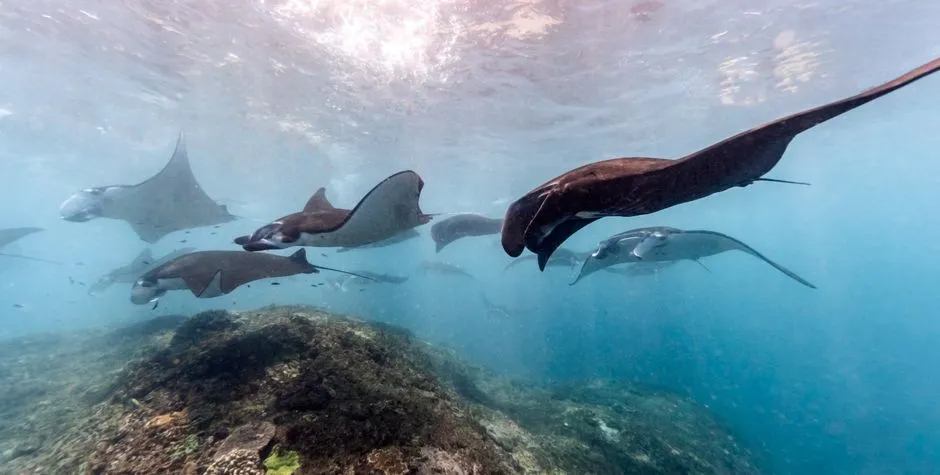
Here is the short version most guides bury: reef mantas are resident in Bali year-round. The cleaning and feeding stations off the south coast of Nusa Penida — Manta Point and Manta Bay — hold Mobula alfredi in every month of the year, so there is no "closed season" and no month where the animals simply vanish. Sightings at these sites run at roughly 70–90% of dives across the calendar, which is unusually reliable for a large pelagic.
So the real question is not when do the mantas show up but when are the conditions best for getting in the water with them. That answer is driven almost entirely by swell, not by the mantas' movements. Because the manta sites sit on Nusa Penida's exposed south-west corner, big Indian Ocean swell can make the boat ride rough and the dive surgy — occasionally rough enough that operators cancel. Timing a manta trip well is really about timing the swell.
The Quick Answer: Best Months
For the calmest surface conditions and the most comfortable dives, aim for the shoulder and dry-season windows:
| Period | Months | Manta odds | Conditions | Verdict |
|---|---|---|---|---|
| Dry season | May–Sep | High | Calmest swell, cooler water | Best all-round |
| Shoulder | Apr, Oct | High | Usually settled, fewer crowds | Sweet spot |
| Wet season | Nov–Mar | Still high | Bigger swell, more cancellations | Good but variable |
| Peak swell | Dec–Feb | Still high | Roughest boat rides, surgiest dives | Go, but stay flexible |
The headline: April–May and September–October tend to give the best balance of settled seas, good visibility, and thinner crowds. July and August are reliably calm but coincide with Bali's busiest tourist months, so sites and boats are crowded. If you want the animals with the least hassle, target the shoulder months.
Crucially, do not write off the wet season. December through February still delivers mantas on most dives; you simply accept a bumpier boat ride and a higher chance that a given day gets blown out. Operators read the swell forecast and often move between Manta Point and the more sheltered Manta Bay depending on the day. For the full picture of how conditions shift across the year, see our season-by-season diving breakdown.
Why Swell Matters More Than "Season"
Mantas come to Nusa Penida for two reasons: to be cleaned by wrasse at the cleaning stations, and to feed on plankton blooms. Neither of those is strongly seasonal at these sites, which is why the animals stay put year-round. What changes month to month is the sea state.
- Swell direction: The manta coast faces the open Indian Ocean to the south. Southern-hemisphere winter swells (roughly May–September) are often long-period and manageable; wet-season storm swells can arrive short and punchy.
- Surge, not current: Unlike the drift dives elsewhere on the island, Manta Point is a shallow, stationary encounter. The challenge is the back-and-forth surge over the reef, and surge scales directly with swell size.
- Cancellations: On big-swell days the exposed sites become unsafe to board or dive, and reputable operators will cancel or reroute. Building a spare day or two into your itinerary is the single best insurance against a blown-out trip.
Because the driver is swell rather than biology, a calm week in January can outperform a rough week in July. Check a marine swell forecast for Nusa Penida in the days before your dive, and trust your operator's call on the morning.
Water Conditions Through the Year
Manta encounters happen in plankton-rich, often green water — the murk that annoys photographers is precisely what draws the mantas in to feed. Clear blue water is not the goal here.
| Factor | Typical range at manta sites | Notes |
|---|---|---|
| Water temperature | 24–28 °C | Cooler if a thermocline pushes in; a 5mm wetsuit is sensible |
| Visibility | 8–20 m | Lower vis often means more plankton and better manta odds |
| Depth | 5–15 m | Mantas cruise the shallows over the cleaning station |
| Main challenge | Surge | Scales with swell; worst in peak wet season |
Note that the manta coast can run noticeably cooler than Bali's north-east dive sites, especially when the same upwellings that bring the mola mola sunfish push cold water up from the south. Many divers underdress for Nusa Penida and regret it. A 5mm suit, and a hood if you feel the cold, makes a 60-minute surge dive far more enjoyable.
Choosing Sites and Trip Style
You reach the manta sites either on a day trip from mainland Bali (usually a fast boat from Sanur, then a dive boat around the island) or by staying on Nusa Penida or Nusa Lembongan and diving locally. Day trips are efficient but long; basing on the islands gives you more dives and flexibility if one day gets blown out.
- Manta Point — the classic cleaning station, more exposed, surgier, best for sustained diver encounters.
- Manta Bay — slightly more sheltered, shallower, often better in bigger swell and ideal for shallow divers and snorkelers.
If diving isn't your thing or you have non-diving days, mantas are one of the few big animals you can reliably meet on the surface; our guide to snorkeling with mantas and other spots covers how. For the full dive briefing — surge, etiquette, and what the encounter actually involves — read our dedicated Manta Point site guide.
Pairing mantas with Bali's other headline animals
If you're building a trip around the manta calendar, it's worth knowing how it overlaps with Bali's other big draws, because a well-timed week can stack several encounters:
- Mola mola (oceanic sunfish) peak roughly July–October at nearby Crystal Bay, when cold upwellings bring them shallow. This overlaps neatly with the calm dry-season manta window, so a single Nusa Penida trip in that period can target both.
- Reef sharks and macro life at Tulamben and Amed in the north-east run year-round and are largely weather-independent, making them a reliable dry-day backup if the manta coast blows out.
- Best all-round overlap: September–October tends to catch settled manta seas, the tail of sunfish season, and generally good visibility across the island — a strong single window if you want maximum variety from one trip.
Because the manta sites and Crystal Bay are on the same island, you rarely have to choose. Most operators build multi-dive Nusa Penida days that hit a manta site plus a drift or sunfish site, weather permitting.
How many days to allow
Give the manta coast a minimum of two dive days, not one. A single day leaves you with no fallback if the swell is up, and blown-out days do happen — most often in peak wet season, but occasionally any month. Two or three days lets an operator wait out a rough morning, move between Manta Point and Manta Bay, and still get you a strong encounter. Divers who fly in for one shot and get unlucky with the swell are the ones who leave disappointed; a little schedule padding almost always fixes it.
Diving With Mantas Responsibly
Reef mantas are curious and will happily circle relaxed, motionless divers for an entire dive — but they leave the moment they feel chased or crowded. Good etiquette protects both the encounter and the animal:
- Stay low and still. Settle on the sand or reef a respectful distance from the cleaning station and let the mantas come to you. Never chase, touch, or swim over them — passing above a manta breaks the cleaning behaviour and pushes it off the station.
- Control your buoyancy in surge. Solid buoyancy and a hands-off position keep you off the reef and out of a manta's path. If your buoyancy isn't dialled in, the surge here will expose it.
- Dive within your training. The manta sites are approachable for Open Water divers in calm conditions, but they demand comfort in surge and shallow-water positioning. On bigger-swell days, honestly assess whether the conditions match your experience, and follow your operator's briefing.
- Go with reputable, licensed local operators. Skippers who read the swell, cap group sizes, and enforce no-touch rules give you both a safer dive and a better encounter. Conditions on the day always override anything you read online.
Time your trip around the swell rather than the calendar, build in a spare day, dress warmer than you'd expect for the tropics, and you can dive with reef mantas in Bali in essentially any month of the year.