Manta Point, Nusa Penida: How to Dive With Reef Mantas
Manta Point at a Glance
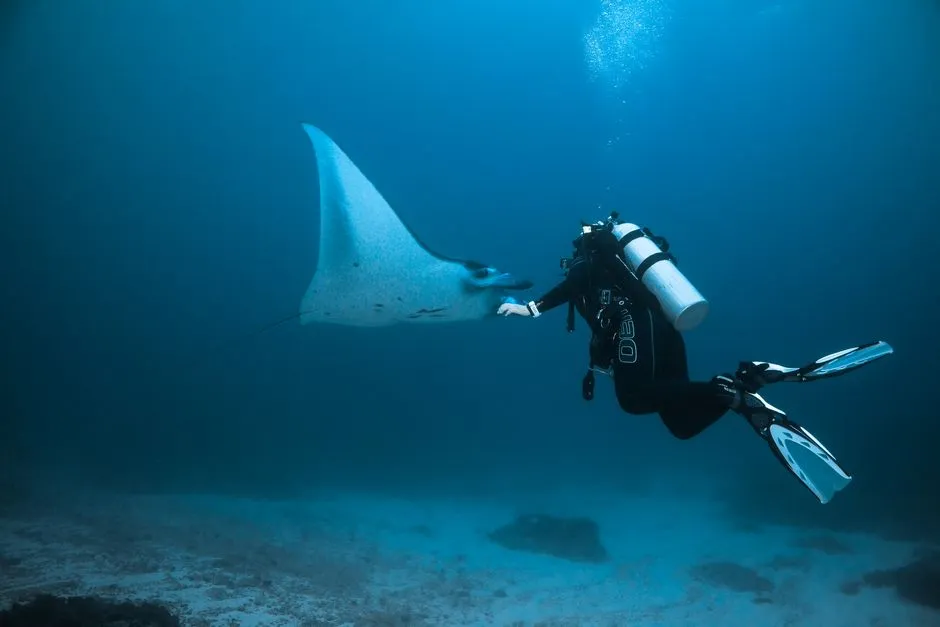
Manta Point sits on the exposed south-west coast of Nusa Penida, a limestone cliff-lined bay where reef mantas (Mobula alfredi) queue at a cleaning station to have parasites picked off by wrasse and other cleaner fish. It is a shallow, surge-driven site — most of the action happens between 5 and 15 metres — and unlike the drift walls elsewhere on the island, you dive it as a stationary encounter rather than a fast drift. That combination makes it one of the few places in Bali where Open Water divers can realistically share the water with three-to-four-metre mantas, provided the swell cooperates.
The trade-off is the surface conditions. Manta Point is fully open to the Indian Ocean swell rolling up from the south, so the boat ride is often bumpy and the shallow water surges back and forth over the reef like a slow washing machine. You are rarely deep and rarely fighting current the way you are at Crystal Bay, but you are constantly working to hold a stable, hands-off position while a large animal glides past. Understanding that surge — and the etiquette that keeps both you and the mantas calm — is what separates a good Manta Point dive from a stressful one.
What the Dive Actually Involves
Conditions and profile
| Factor | Typical range | Notes |
|---|---|---|
| Depth | 5–15 m (max ~18 m) | Mantas usually cruise the shallows over the cleaning station |
| Water temp | 24–28 °C | Warmer than Crystal Bay; cooler if a thermocline pushes in |
| Visibility | 8–20 m | Plankton-rich water is why mantas come — clear water is not the goal |
| Current | Light to moderate | Surge is the real challenge, not horizontal drift |
| Entry | Boat, negative or backward roll | Confirm the entry style in your briefing |
| Level | Open Water and up | With a calm swell and a good operator |
The signature feature is surge: the swell that breaks against the cliffs pushes water shoreward, then sucks it back, and at 8–12 metres you feel yourself carried a body-length forward and back on a slow rhythm. It is not dangerous in itself, but it makes buoyancy and positioning harder, and it can bump you into the reef or another diver if you are not paying attention. Green, plankton-heavy water is normal and expected here — the murk that frustrates photographers is exactly what draws the mantas in to feed and get cleaned.
The cleaning station
Mantas visit Manta Point to be serviced. They slow down, sometimes almost hovering, while cleaner wrasse work over their gills and skin. Divers settle on the sand or reef a respectful distance from the station and wait. When the mantas are relaxed, they can circle the same spot for the entire dive, passing overhead again and again. When they are spooked — usually by divers crowding the station or chasing — they leave, and everyone loses the encounter.
Manta Bay vs Manta Point
These two names get used loosely, and booking the wrong one is a common mistake. They are different sites with different characters.
| Manta Point | Manta Bay | |
|---|---|---|
| Location | SW cliffs, exposed | Slightly more sheltered bay |
| Main draw | Cleaning station | Feeding aggregation |
| Depth | 5–15 m | Very shallow, 3–10 m |
| Manta behaviour | Circling to be cleaned | Barrel-rolling / surface feeding |
| Best for | Divers seeking sustained encounters | Snorkelers and shallow divers |
| Surge | Often significant | Variable |
In practice, most day boats will run to whichever site the mantas are showing at on the day — skippers radio each other and read the swell. If your operator says "we'll try Manta Point but move to Manta Bay if the swell is up," that is good judgement, not a bait-and-switch. Both are on the same stretch of coast, and both deliver reef mantas; the difference is behaviour and shelter, not species.
Manta Etiquette: Seeing Them Responsibly
Reef mantas are curious and will often approach divers who stay calm and predictable. Everything about good etiquette is designed to keep them relaxed so they stay:
- Stay low and to the side of the cleaning station. Never settle directly on top of it — that is the one spot the mantas actually need.
- Do not chase, touch, or swim underneath a manta. Bubbles rising into their belly will drive them off, and a touch can strip the protective mucus from their skin.
- Let them come to you. Hold position, breathe slowly, and a curious manta will frequently loop back over your head on its own.
- Control your fins and your buoyancy. Kicking up sand or crashing into the reef in the surge scatters the whole encounter for everyone.
- No flash for close macro-style shots at the gills; keep photography unobtrusive and never manoeuvre to block a manta's path.
Mantas are individually identifiable by the unique spot patterns on their bellies, and researchers across Indonesia use diver and snorkeller photos for population ID. A clear, non-intrusive belly shot is genuinely useful to science — a good reason to photograph from below and to the side rather than crowding in.
For a fuller picture of when the animals show up most reliably, see our guide to manta ray season in Bali. Mantas are present at Nusa Penida year-round, but swell, plankton, and water temperature shift the odds month to month.
When to Dive Manta Point
Reef mantas are resident around Nusa Penida all year, so there is no true "off season" for the animal itself. What changes is whether you can dive the site comfortably.
- Dry season (roughly April–October): Generally calmer mornings and the most workable window, though the south coast can still get big Indian Ocean swell.
- Wet season (roughly November–March): More plankton and often more mantas, but heavier, less predictable swell that can close the site on short notice.
- Time of day: Mornings are usually calmer before the wind builds. Book an early boat.
Because the site is swell-dependent, flexibility matters more than picking a "perfect" month. Give yourself two or three diving days around Nusa Penida rather than betting a single trip on one morning, and let the operator move you to a sheltered alternative if Manta Point is blown out.
Getting There: Logistics
Most divers reach Manta Point one of two ways: a day trip from mainland Bali (fast boat from Sanur, then a dive boat around the island) or by staying on Nusa Penida or Lembongan and diving with a local centre. Day trips are efficient but long, with an early start and a lot of the day spent in transit; staying on the island buys you calmer logistics and the chance to re-try the site on a second morning if the swell is up.
We cover the trade-offs, timings, and boat connections in detail in the Nusa Penida day-trip diving guide. If you are combining Manta Point with the island's drift walls or Crystal Bay in the same trip, plan the order around the tides and swell rather than a fixed schedule.
Typical Costs
Prices vary by operator, season, and whether you buy a package, but these ranges are realistic as a planning baseline (expect quotes in USD or IDR):
| Item | Rough range (USD) | Notes |
|---|---|---|
| Two-dive Nusa Penida day trip | $90–150 | From Sanur, incl. boat, guide, tanks |
| Extra fun dive | $35–55 | Third dive add-on |
| Full gear rental | $15–30/day | Often bundled in packages |
| Nitrox (where offered) | $10–20/dive | Not always available |
Cheaper is not always better here. Nusa Penida diving rewards operators who run small guide-to-diver ratios, brief thoroughly, and make conservative calls about which site to dive in a given swell. That judgement is worth paying a little more for.
Safety and Currents
Manta Point is one of the gentler Nusa Penida sites for current, but "gentler" is relative — this is still an exposed, swell-driven island coast, and conditions change fast. The surge that makes the dive tricky can also push a distracted diver onto the reef or into the shallows. Do not treat it as an easy shallow dive just because the numbers look modest.
A few non-negotiables:
- Dive within your certification and recent experience. If you have not dived in a while, do a check dive at an easier Bali site first.
- Stay close to your guide and your buddy, and follow the day's briefing to the letter — local knowledge on the morning always overrides anything written online.
- Choose a reputable, licensed operator. Around Nusa Penida this is a genuine safety factor, not a formality.
- Mind your surface intervals and depth, and carry a surface marker buoy (SMB); many operators require one for the region.
The bigger currents and downcurrents live at Nusa Penida's other sites, and understanding them matters before you dive anywhere on this coast. Read our full Nusa Penida currents and safety guide before you go — it explains what the island's water can actually do and how good operators manage it. Nothing here replaces certified instruction or a proper in-water briefing; your instructor and local guide make the call on the day.
The Bottom Line
Manta Point is the most accessible big-animal encounter in Bali: shallow enough for newer divers, home to resident reef mantas year-round, and genuinely thrilling when a four-metre wing sweeps overhead at the cleaning station. Go in expecting green water and rocking surge rather than blue-water clarity, respect the etiquette that keeps the mantas relaxed, dive with an operator who reads the swell honestly, and give your trip enough spare days to wait out a bad morning. Do that, and there is no more reliable way to log a manta dive in Bali.