Crystal Bay Diving: Your Best Shot at Mola Mola in Bali
Crystal Bay: The One Site Built for Mola Mola
If you have flown to Bali to see a mola mola (oceanic sunfish), Crystal Bay is where you point your trip. Tucked into the northwest corner of Nusa Penida, it is the single most reliable site in the region for sunfish encounters — not because the animals live there, but because its cold, upwelling water and cleaning stations give divers a realistic window to meet one. That reliability comes with a trade-off: Crystal Bay can also serve up downcurrents, thermoclines near 18°C, and surge that make it a poor choice for brand-new divers. This guide covers why the site works, what the dive actually involves, and the honest experience level it demands.
A quick reality check before anything else: no operator can guarantee a mola mola. They are wild, deep-dwelling fish that rise to be cleaned on their own schedule. Crystal Bay simply gives you the best odds in Bali — and even then, plenty of divers do everything right and still surface without a sighting.
Why Crystal Bay Is the Prime Sunfish Site
Mola mola normally live hundreds of metres down in cool water. Around Nusa Penida in the austral winter (roughly July to October), deep, nutrient-rich water wells up along the walls, dropping temperatures at depth and pulling the sunfish toward diveable ranges. When they arrive, they hover over reef outcrops so that bannerfish and other cleaner species can pick parasites off their skin — behaviour that keeps them stationary long enough for divers to watch from a respectful distance.
Crystal Bay concentrates several favourable ingredients:
- A deep sloping wall on the bay's outer edges that drops well past recreational limits, where sunfish stage before rising.
- Cleaning stations at depths divers can reach, typically in the 18–30 m band.
- Cold upwelling that the fish follow, funnelling them into the bay rather than scattering them along open coast.
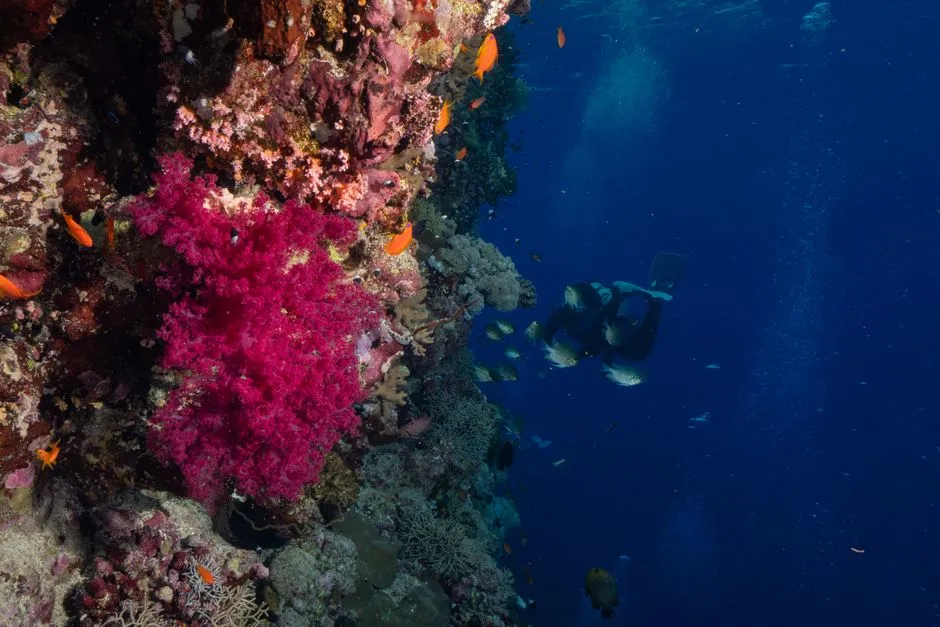
- A relatively sheltered central basin where boats moor and less experienced divers can potter over healthy coral, even when the mola action is happening deeper on the corners.
That combination is why dive centres across Sanur, Nusa Lembongan and Nusa Penida run Crystal Bay so heavily in season. For the full picture of the animal's timing and the other sites that hold it, see our guide to mola mola in Bali: when and where to see the sunfish.
The Dive: What Crystal Bay Actually Involves
Layout and depth
Most dives start from a boat moored in the central bay. You descend onto a sandy bottom and coral bommies around 5–12 m, then work toward one of the bay's rocky points. The mola cleaning zones sit deeper — commonly 20–30 m — along the wall that falls away toward the channel between Penida and Lembongan.
Because sunfish sit at depth, the temptation is to drop straight to 30 m and hang. Good guides resist that: they manage the group's depth, watch no-decompression limits, and keep an eye on gas, because a cold, deep dive burns air faster than the warm shallows most holiday divers are used to.
Temperature and thermoclines
This is the detail that surprises people. The bay's surface can read a pleasant 26–28°C, but drop through a thermocline and the water can plunge to 18–20°C, sometimes lower in a strong upwelling. That shimmering, oily-looking layer is exactly what draws the mola — and it is cold enough that a 5 mm wetsuit, a hood, and gloves are sensible, even in the tropics. Divers in thin suits get cold fast, which shortens the dive and dulls attention right when you need it.
Current and surge
Crystal Bay is usually calmer than Manta Point or the drift sites along Penida's south coast, but it is not a beginner pond. Two things demand respect:
- Surge near the shallow reef and the famous underwater passage, which can push divers back and forth against rock.
- Downcurrents on the outer wall — cold, descending water that can pull a diver deeper than intended. These are the genuine hazard at Crystal Bay and the reason the site earns its intermediate-plus reputation.
The response to a downcurrent is trained, not improvised: signal your buddy, move horizontally off the wall into open water, add gas or kick to arrest the descent, and abort toward the mooring if it persists. If that sequence does not already feel automatic, this is not the site to learn it on. We cover the mechanics in depth in our Nusa Penida currents and safety guide.
What Experience Level Do You Really Need?
Crystal Bay is often sold as a bucket-list dive, and marketing can blur the line on who should be there. Here is an honest breakdown.
| Diver profile | Crystal Bay in mola season | Notes |
|---|---|---|
| Open Water, few dives | Not recommended | Depth, cold and downcurrent risk exceed the training. |
| Open Water, 20+ logged dives | Marginal | Only with a top operator, small group, and a conservative shallow plan. |
| Advanced Open Water | Suitable | The realistic minimum for the deeper mola zones. |
| AOW + drift/deep experience | Ideal | Comfortable managing depth, cold and current. |
A few operators will take confident Open Water divers to the sheltered inner bay while keeping them shallow and away from the downcurrent zone. That can be a fine coral dive — just understand you are trading away most of your mola odds for a safer profile. Nitrox is worth having if you are certified, since it extends bottom time in the depth band where sunfish appear.
If your logbook is thin, the responsible move is to build dives elsewhere first. Bali makes that easy: the shallow, forgiving Tulamben and East Bali sites are ideal for adding experience before you take on Penida's colder, current-swept water.
Timing Your Dive for the Best Odds
Season is the biggest lever. Sightings cluster in the July–October window, with August and September widely regarded as the peak, though divers report molas as early as June and as late as November in some years. Water temperature is the real trigger, not the calendar, so a cold year can shift the pattern. Our best time to dive in Bali breakdown maps this against visibility, swell and the rest of the region's marine life.
Within a day, a few habits help:
- Dive early. First boats of the morning beat both the crowds and, some guides argue, catch calmer cleaning behaviour.
- Go midweek if you can. Crystal Bay gets busy in peak season, and a wall crowded with divers can spook a shy fish.
- Book multiple days. One dive is a lottery ticket. Two or three days at Penida dramatically improve your cumulative odds.
- Stay flexible. If the bay is blown out or over-crowded, a good operator will suggest an alternative Penida site rather than force a poor dive.
Choosing an Operator and Diving Responsibly
The operator matters more here than at almost any other Bali site, because the margin for poor group management is thinner.
Look for a centre that:
- Caps group size (aim for four to six divers per guide, not a dozen).
- Asks for your certification and recent dive history before booking — and means it.
- Briefs downcurrents and thermoclines specifically, not just a generic site talk.
- Carries surface signalling gear (SMBs) and has a sensible lost-diver and pickup plan for the channel.
- Enforces mola etiquette: no chasing, no touching, no blocking the fish's exit route to open water. Sunfish are easily stressed; a crowd that swims at one usually ends the encounter for everyone.
Give the animal space — a common guideline is to hold at least 3 metres back and let it decide to approach — and keep your fins off the reef. Responsible behaviour is not only ethical; a calm fish stays longer, which is better for every diver on the wall.
Getting there
Most divers reach Crystal Bay one of two ways: a day trip by fast boat from Sanur (around 30–45 minutes each way, then a short boat hop to the site), or by staying on Nusa Penida or Lembongan and diving locally. Day-tripping is convenient but adds surface travel and a hard schedule; basing on the islands gives you more dives and flexibility across the short mola window. Prices vary widely by season and inclusions, but a two-tank Penida day trip commonly runs in the US$90–160 range — always confirm what is included and treat any figure as indicative.
The Honest Bottom Line
Crystal Bay is the best mola mola site in Bali, and in the right conditions it delivers one of Southeast Asia's great dives. But it rewards preparation over enthusiasm. Come in season, come with enough experience to manage cold and current, pick an operator that takes your safety seriously, and give the fish room to be a fish. Do that, and you have given yourself the best shot Bali offers — with the maturity to enjoy the dive whether or not a sunfish shows.
And if it does not? You will have dived a beautiful coral bay on the edge of the Coral Triangle, and you will have every reason to come back and try again.