Scuba Gear Rental in Bali: Fit, Checks and Costs
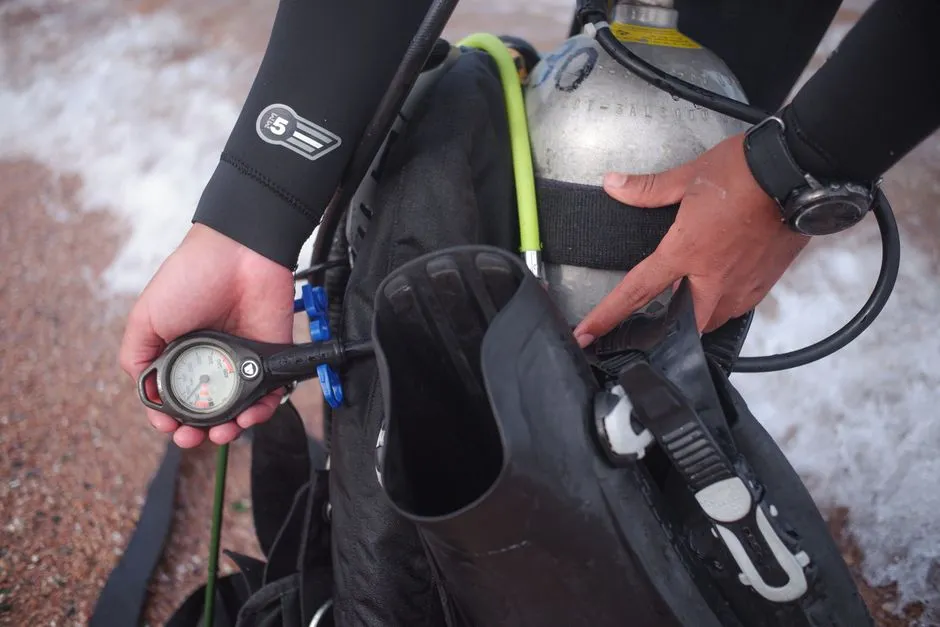
- What should you check before renting scuba gear in Bali?
- What does a full rental set actually include?
- Which rental arrangement suits your trip?
- What information should you send before arrival?
- How should the fitting appointment work?
- What condition and servicing questions matter?
- How do you check the cleaning process?
- What must you understand about the rental computer?
- What belongs in the final pre-dive check?
- What should you retain at handover and return?
- Sources
What should you check before renting scuba gear in Bali?
Choose rental scuba equipment by fit, condition, familiarity and written inclusions before comparing price. Confirm the exact items and sizes, allow time for professional familiarization, and complete your trained pre-dive checks with your buddy. Return suspect or unsuitable equipment to qualified staff before entering the water. A rental package does not establish readiness: stay within your training and current capabilities, and decline an unsuitable dive.
Our recommendation is a reservation with an itemized equipment list, an opportunity to try the actual gear, and a clear replacement arrangement. This is a desk-researched checklist for certified recreational divers, not an inspection or endorsement of a Bali operator. It does not teach equipment repair or emergency procedures.
What does a full rental set actually include?
Ask the provider to name each item. A buoyancy control device, or BCD, is the inflatable equipment used to help manage buoyancy; it is not a substitute for a separately specified dive computer. Record the regulator, BCD, exposure suit, mask, fins, boots where needed, computer, cylinder and weights as separate entries. Also ask about the signaling equipment appropriate to the outing and your training.
One concrete example shows why wording matters. On 13 September 2026, Puri Madha's guided-dive page listed a full equipment set excluding a computer at IDR 300,000 per day, and a computer separately at IDR 150,000 per day. Those two listed rental charges add to IDR 450,000 per day. That is equipment arithmetic from one menu, not the price of a complete dive outing or an island-wide average.
The same page lists tanks and weights under guided-dive inclusions. Confirm your actual booking in writing: availability, payment terms and what the provider means by a rental day still need answers. Our Bali diving cost guide handles the larger trip budget.
Which rental arrangement suits your trip?
Use this comparison as an editorial planning tool. No arrangement wins without suitable equipment and a professional assessment of the planned diving.
| Arrangement | Why consider it? | What to resolve before paying |
|---|---|---|
| Rent the equipment you need from the diving provider | One booking can specify both the outing and the equipment handover | Exact inclusions, sizes, fitting time and replacements |
| Bring familiar personal items and rent the remainder | Retain selected items you already know how to use | Written list of supplied items and compatibility with your own equipment |
| Hire separately from the outing provider | Could meet a specific equipment request | Who checks suitability, transports it and handles a fault or replacement |
Do not infer that a discount applies when you bring your own gear. Ask. Likewise, “computer available” does not mean a model has been reserved or included. Put any unresolved item beside the quoted total rather than treating it as free.
What information should you send before arrival?
Send your certification and recent diving history, the items you intend to bring, usual equipment sizes and any fitting difficulties. Ask the shop which measurements its own size charts require. A clothing size alone is an incomplete description of how a particular suit or BCD will fit.
Request the exact model when equipment configuration matters to you, but distinguish a preference from a confirmed reservation. Ask what happens if the reserved item is unavailable. Save the response with the booking rather than relying on an informal assurance.
If you have been away from diving or cannot confidently recall setup and checks, arrange instruction before a demanding outing. PADI's refresher guidance describes a professional reviewing recent experience and adapting practice to the diver, including unfamiliar rental equipment. A brief counter demonstration is not automatically an adequate refresher. Medical fitness concerns belong with a physician familiar with diving.
How should the fitting appointment work?
Try the actual items you will use, with qualified staff assisting. DAN's rental guidance emphasizes trying exposure suits and checking personal-item fit and cleanliness. A wetsuit should fit closely without restricting breathing or movement; a loose, bunched suit is not the same fit. Tell staff about restriction or discomfort instead of accepting it as the cost of renting.
Try boots and fins together when they will be used together. Ask the professional to check mask fit and adjust the equipment appropriately. Record a fit problem in ordinary language: “heel slips,” “pressure here,” or “cannot reach this control.” A precise description helps staff understand what needs changing.
Assess a BCD as part of the intended setup. DAN's new-equipment orientation notes that its fit changes with a cylinder attached and that configurations differ. Arrange supervised familiarization in an appropriate controlled environment before more challenging diving. Do not make your first encounter with an unfamiliar configuration during a difficult open-water dive.
What condition and servicing questions matter?
Ask who maintains the rental gear, which manufacturer's service requirements apply and whether the actual items are due for service. PADI's equipment-check guidance explains that some equipment needs professional servicing even when it appears to work. An attractive exterior is not a service record.
Have qualified staff address damaged hoses or mouthpieces, worn straps, faulty fastenings, leaks or a computer warning before use. Do not postpone a reported problem until a scheduled service date. Do not dismantle a regulator, alter a cylinder valve or improvise a repair to keep the departure on time.
DAN's equipment inspection guide also highlights straps, buckles, suit seams, computer condition and battery power. These are useful observations to bring to staff, not a technical certification you can issue after a visual check. Ask for another suitable item when a concern cannot be resolved properly.
How do you check the cleaning process?
Ask how shared mouth-contact equipment and suits are cleaned between users, which equipment-compatible products are used, and who performs the process. Request clean equipment if its condition gives you concern. Do not try to solve a hygiene problem by applying an improvised chemical mixture yourself.
DAN's cleaning guidance directs divers to manufacturer recommendations and warns that unsuitable cleaners can damage gear. Our rental-specific recommendation is to have the provider explain and perform its cleaning procedure. A freshwater rinse and an unexplained claim of “sanitized” are not enough information to understand that procedure.
Also agree on return handling: where used items go, who rinses them and how they are kept separate from ready-to-issue equipment. This is a request for the provider's workflow, not a home disinfection recipe.
What must you understand about the rental computer?
Ask for the model and its manual before departure. With the qualified professional, review its display, units, alerts and settings for your planned diving. DAN's rental article warns that a computer can retain a previous user's gas setting and that an air-integrated computer must be paired with the correct transmitter. Do not guess settings or assume every display includes cylinder pressure.
If you cannot understand the information you need, resolve that through instruction or a suitable familiar alternative before diving. Ask the professional how prior diving and any proposed computer change affect the plan. For example, Suunto's DX safety guidance warns against sharing an operating computer between users and explains that its recorded profiles must match the diver. Follow the actual model's manual; a replacement must not be treated as permission to ignore earlier dives.
What belongs in the final pre-dive check?
Complete your training-agency procedure with your buddy before every dive, including later dives in the same day. PADI's buddy-check guidance covers buoyancy equipment, weights, releases, air and a final check. Both divers need to understand the actual equipment configuration. This written reminder does not replace the practical skills taught in training.
Breathing-gas quality is a separate concern. DAN's breathing-gas guidance recommends asking about testing and compressor maintenance and states that an absence of smell or taste cannot rule out contamination. Do not deliberately breathe suspect gas as a test. Report concerns to qualified staff and do not use an unresolved suspect cylinder. Suspected exposure requires medical evaluation.
What should you retain at handover and return?
Keep an item list, the agreed rental period and the written charges. Note existing damage with staff and retain an agreed record where practical. Ask how a replacement, missed dive, late return or disputed damage charge is handled; do not invent an insurance benefit or assume a deposit settles liability.
At return, reconcile the same item list and request acknowledgment. Report anything that behaved unexpectedly so the provider can assess it before reissuing it. For wider questions about the guide, group and emergency arrangements, use our operator-selection guide. Build fitting and familiarization time into your Bali trip plan, before committing to the diving itinerary.